COURSE INFO

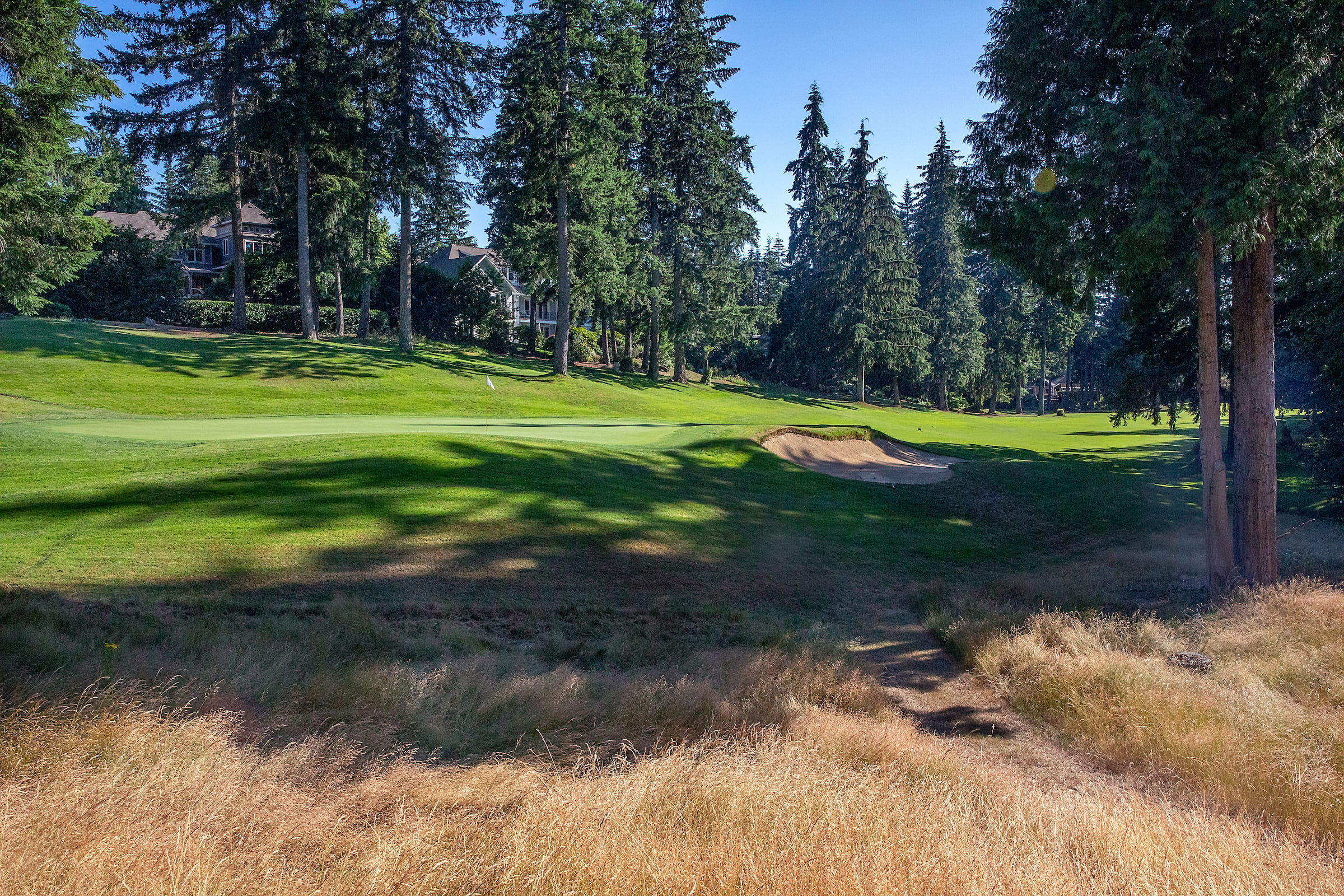
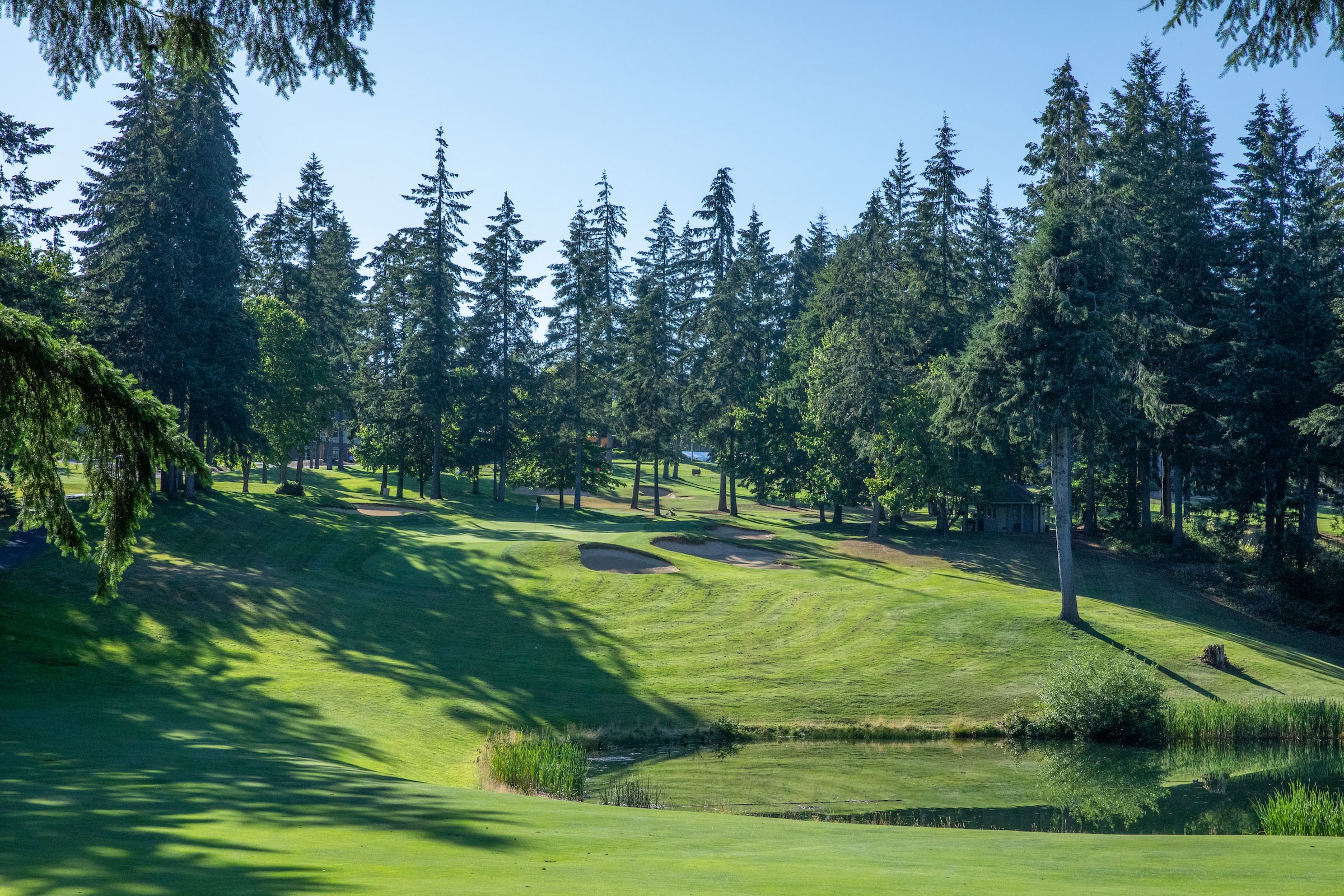
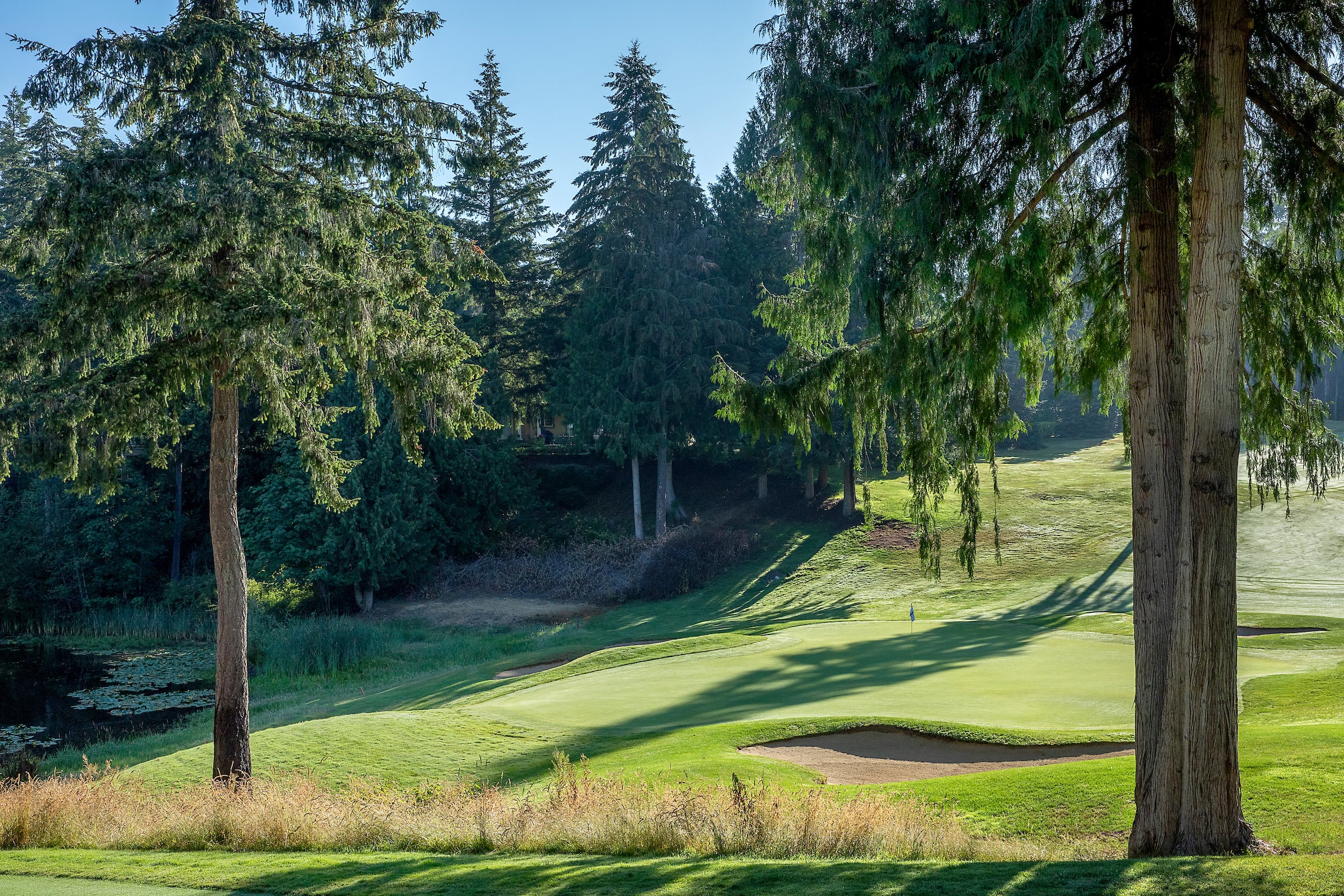
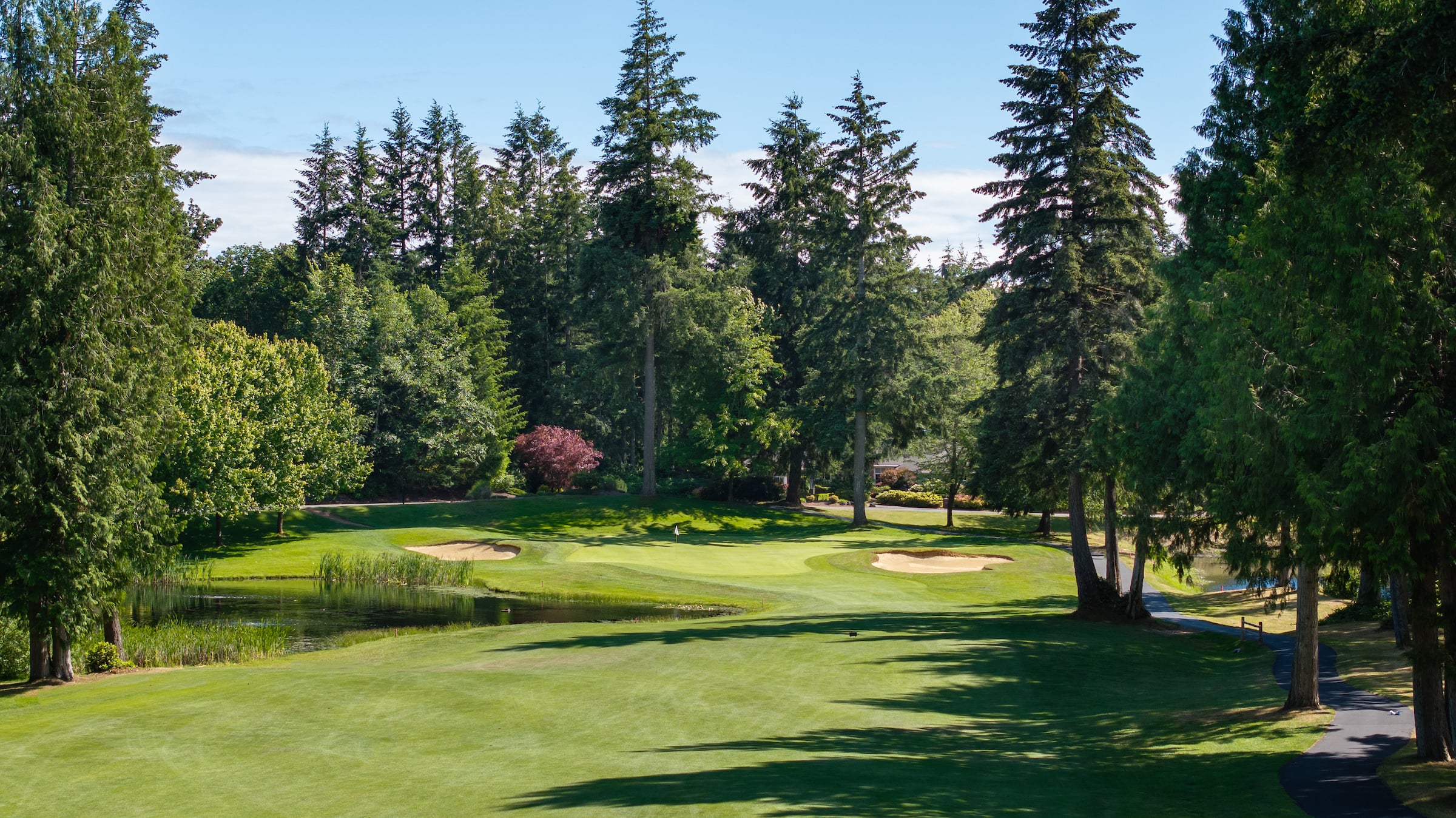
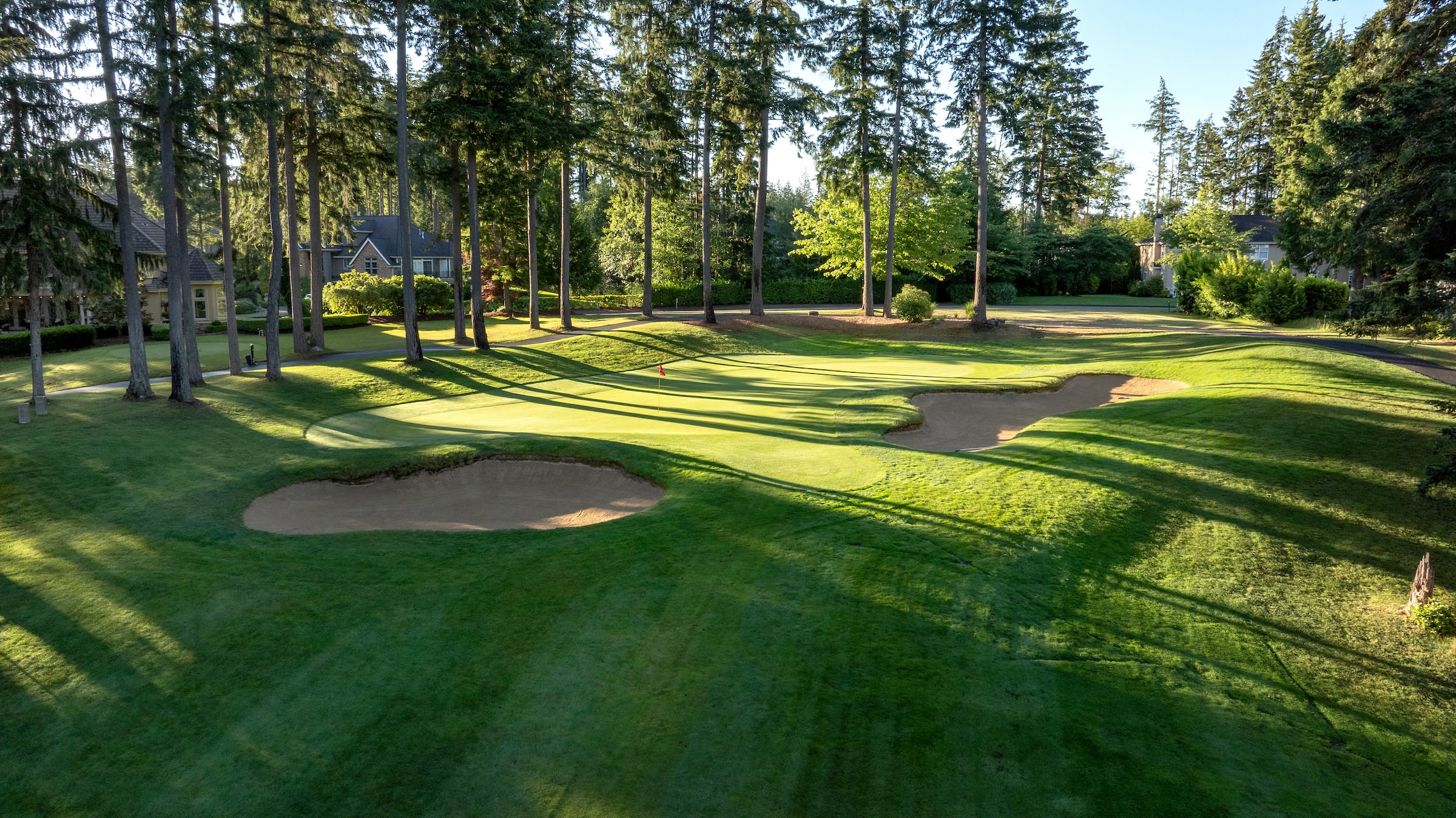
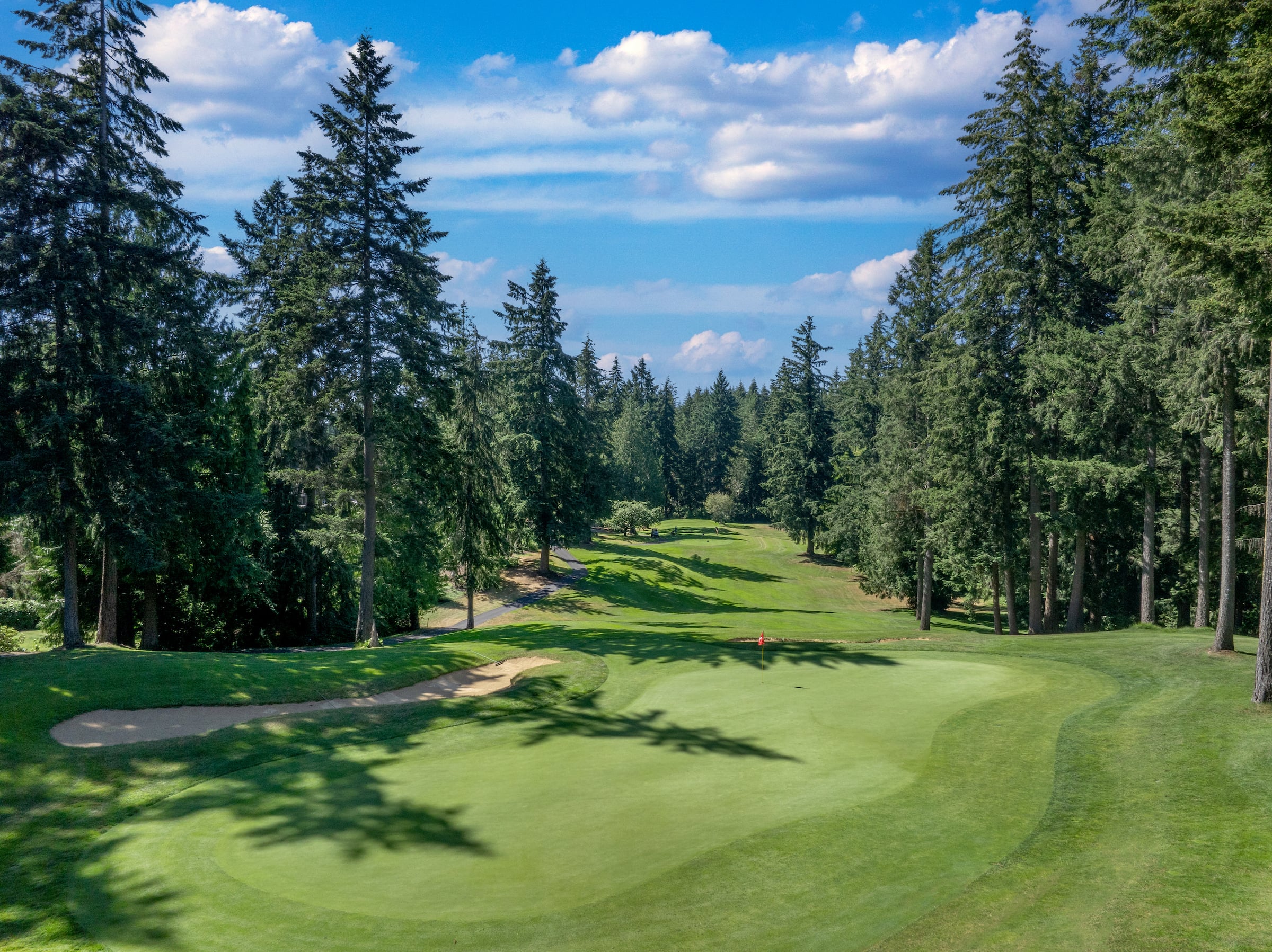
Designed by Robert Muir Graves and ranked among the Top 10 courses in Washington, Canterwood’s 18-hole, par-72 layout delivers a true Pacific Northwest golf experience with tree-lined fairways, water features, elevation changes and strategic shot values throughout the round.

1st Hole

Par 5 · 591

Pro’s Tip:
The opening hole of this stunning golf course is a dogleg right par 5. A well-placed drive should avoid the bunkers on the left side of the landing area. Players will then need to lay up to a comfortable distance in order to avoid the water that guards both sides of the green.

Tee 1: 591

Tee 2: 555

Tee 3: 545

Tee 4: 510

Tee 5: 490

Tee 6: 440

2nd Hole

Par 4 · 432

Pro’s Tip:
The second hole is a fairly straightforward par 4. Players will want to keep their ball in the middle of left side of the hole as they approach the putting surface in order to give them the best angle. The green features a false front and slopes right-to-left and back-to-front.

Tee 1: 432

Tee 2: 390

Tee 3: 427

Tee 4: 352

Tee 5: 352

Tee 6: 326

3rd Hole

Par 3 · 200

Pro’s Tip:
This uphill par 3 plays at least one club longer than the yardage indicates. The green is shallow and protected in front by two bunkers, so a premium is placed on distance control.

Tee 1: 200

Tee 2: 164

Tee 3: 176

Tee 4: 149

Tee 5: 140

Tee 6: 117

4th Hole

Par 4 · 427

Pro’s Tip:
The tee box on this beautiful par 4 looks down on the rest of the hole. The first thing a player will have to do is carry the water short of the narrowing fairway. Around 100 yards out the approach becomes more difficult, so staying back has its benefits. The two-tiered green is elevated with another false front.

Tee 1: 427

Tee 2: 367

Tee 3: 390

Tee 4: 343

Tee 5: 310

Tee 6: 291

5th Hole

Par 4 · 419

Pro’s Tip:
This relatively short par 4 provides a chance to attack. Laying short of the left fairway bunker off the tee also has its advantages, as it takes danger out of play. The wide, flat landing area provides those who hit the fairway a good opportunity to reach the large two-tiered green.

Tee 1: 419

Tee 2: 362

Tee 3: 385

Tee 4: 332

Tee 5: 311

Tee 6: 311

6th Hole

Par 5 · 455

Pro’s Tip:
The sixth is the most difficult hole on the golf course. Off the tee, players will have to hit this narrow fairway with enough length to give them a chance to hit the green in regulation. The green is heavily bunkered, so hitting it with a long-iron will prove difficult.

Tee 1: 455

Tee 2: 420

Tee 3: 436

Tee 4: 410

Tee 5: 400

Tee 6: 388

7th Hole

Par 3 · 227

Pro’s Tip:
This picturesque par 3 plays slightly downhill. The front and left side of this green is protected by a pond, while on the right and back left there’s sand. Players will also notice that the putting surface slopes left, towards the water.

Tee 1: 227

Tee 2: 155

Tee 3: 177

Tee 4: 149

Tee 5: 126

Tee 6: 100

8th Hole

Par 5 · 534

Pro’s Tip:
The eighth is a long dogleg right par 5, that requires a shorter shot off the tee to the corner. Some may be tempted to cut the corner with a driver, but that risk could leave an awkward downhill lie. Playing down the left side of this hole will pay off.

Tee 1: 534

Tee 2: 490

Tee 3: 514

Tee 4: 475

Tee 5: 441

Tee 6: 433

9th Hole

Par 4 · 388

Pro’s Tip:
The final hole on the front nine offers players options off the tee. Longer hitters who can carry the ball 250 yards can go straight at the hole. The other option is to play straight down the fairway to set up a short uphill second shot. This 3-tiered green rewards an approach shot that lands on the correct tier.

Tee 1: 388

Tee 2: 340

Tee 3: 360

Tee 4: 330

Tee 5: 305

Tee 6: 298

10th Hole

Par 4 · 427

Pro’s Tip:
The back nine begins with a picturesque par 4 that features a lake on both sides of the tee. The landing area is wide, but players will notice a prominent tree in the middle. The approach is flat into this large green complex.

Tee 1: 427

Tee 2: 370

Tee 3: 409

Tee 4: 350

Tee 5: 332

Tee 6: 307

11th Hole

Par 4 · 372

Pro’s Tip:
This short par 4 features cross bunkers that split the middle of the fairway. Players will need to lay-up off the tee in order to keep their ball in the short grass. The green on this hole is fairly flat, but does slope slightly back-to-front.

Tee 1: 372

Tee 2: 345

Tee 3: 357

Tee 4: 312

Tee 5: 269

Tee 6: 307

12th Hole

Par 3 · 175

Pro’s Tip:
This slightly downhill par 3 features a green with a false front on the right side. Players will want to keep their tee shot in the middle or left side of the putting surface.

Tee 1: 175

Tee 2: 154

Tee 3: 158

Tee 4: 148

Tee 5: 124

Tee 6: 109

13th Hole

Par 4 · 398

Pro’s Tip:
The thirteenth is a short par 4 with a landing area that slopes left-to-right. Players will want to favor the left side with their tee shot. The approach into the green will have to avoid trouble that surrounds this undulated green.

Tee 1: 398

Tee 2: 343

Tee 3: 365

Tee 4: 315

Tee 5: 307

Tee 6: 250

14th Hole

Par 5 · 602

Pro’s Tip:
The fairway bunkers on the right side of the fairway are in play for long hitters on this par 5. The fairway bends slightly right on its way to the green that slopes down from back-to-front. A bunker in the front-center of the green must be avoided.

Tee 1: 602

Tee 2: 541

Tee 3: 564

Tee 4: 516

Tee 5: 481

Tee 6: 418

15th Hole

Par 4 · 442

Pro’s Tip:
The landing area on this downhill par 4 is guarded on both sides by fairway bunkers. Avoid those and players will have a downhill shot into the green, which is also protected by bunkers. The approach shot typically requires one less club than normal.

Tee 1: 442

Tee 2: 383

Tee 3: 424

Tee 4: 353

Tee 5: 328

Tee 6: 307

16th Hole

Par 4 · 408

Pro’s Tip:
The sixteenth is a narrow par 4 with a slight bend to the left. The tee shot is tight, but also has to avoid the water hidden on the right side. A tee shot too far left will block out a player’s second shot into the elevated, three-tiered green with a false front.

Tee 1: 408

Tee 2: 350

Tee 3: 369

Tee 4: 333

Tee 5: 299

Tee 6: 249

17th Hole

Par 3 · 174

Pro’s Tip:
Accuracy is key on this short par 3. The green is large and protected by bunkers in front and water behind.

Tee 1: 174

Tee 2: 133

Tee 3: 166

Tee 4: 128

Tee 5: 116

Tee 6: 100

18th Hole

Par 5 · 517

Pro’s Tip:
The finishing hole is a par 5 that bends its way uphill towards the clubhouse. An ideal tee shot will play down the right side as the fairway funnels left. A layup to the right fairway will give players the best angle in on their approach. Then, the green features a lot of breaks, mostly to the left, and is heavily protected by bunkers.

Tee 1: 517

Tee 2: 482

Tee 3: 486

Tee 4: 462

Tee 5: 456

Tee 6: 407

GALLERY

BECOME A MEMBER

Where exceptional golf sets the standard.

Explore Memberships

Ready to Play?

From golf access to club amenities, our team members are available to answer questions and arrange a personal tour.

FREQUENTLY ASKED QUESTIONS

How many golf courses are at Canterwood?
Members enjoy access to our 18-hole Gig Harbor course, consistently ranked among the Top 10 in Washington.
Who designed Canterwood Golf Course?
Canterwood was designed by Robert Muir Graves, a respected golf course architect known for strategic layouts that balance challenge and playability.
What practice facilities does Canterwood offer?
Canterwood offers expanded grass tee access, multiple putting greens, a short-game area with bunker play and a covered range for year-round practice.
Can I play the course with my membership?
Yes. Golf Members enjoy full access to golf, along with practice facilities and club amenities that support both casual and competitive play.
Do you offer private golf lessons?
Yes. Our PGA-certified instructors provide lessons for all levels.
Are group clinics available?
Yes. Group lessons, junior programs, and seasonal clinics are offered.
Do you provide club fitting services?
Yes. Professional fittings are available with top golf brands in our Pro Shop.
Is there a junior golf program?
Yes. Juniors can participate in Crush It! Junior Golf instruction, junior golf leagues, and seasonal camps that make learning the game fun and engaging.

MORE GREAT GOLF NEARBY

Through Invited and XLife benefits, nearby clubs offer more ways to play, practice, and explore different course designs without leaving the region.